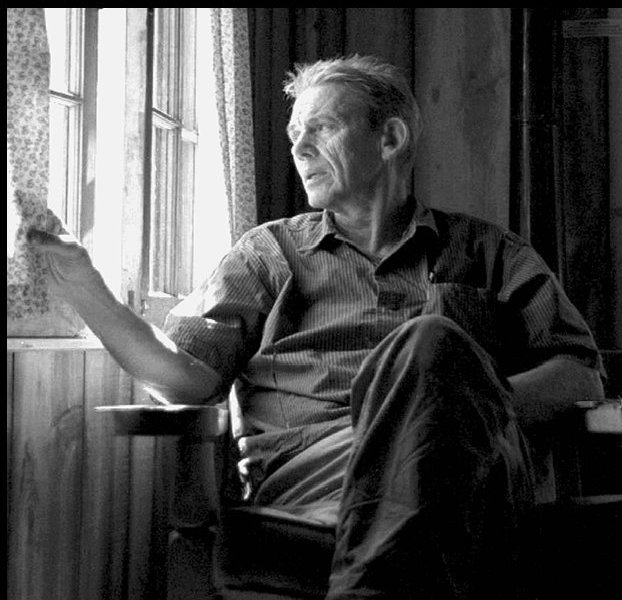


Richard E. Messer grew up in the Colorado Rockies. He earned his Ph. D. at the University… |
of Denver in 1971 and went on to teach contemporary literature and creative writing at several universities. For a time he published a literary magazine entitled, The Monthly. In 1984 he pursued post-graduate work in Analytical Psychology at the C. G. Jung Institute in Kusnacht, near Zurich, Switzerland.
His poetry and fiction have appeared in The Nation, Psychological Perspectives, The Sun, The Black Warrior Review and many other magazines. Through the years he has written a number of articles interpreting literary works and films from a depth psychology perspective.
His book of prose and poetry, Murder in the Family, was awarded the 1996 Nancy Dasher award by the College English Association of Ohio. His second book, published in January 2009, is entitled, A Life on Earth.
In 2001 Richard retired with the title Professor Emeritus of English from Bowling Green State University, but he continues to teach freelance workshops on writing as a means of therapy and healing. Since 1975 he has practiced Tai Chi Chuan and has a teaching certificate in the William C.C. Chen Sixty Movements Short Form.
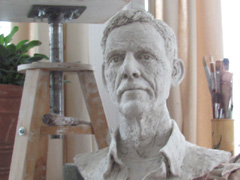
Most recently he has been reunited with an old love: working with clay. Examples of his pottery and sculpture may be seen by clicking ART WORK above.
Richard Messer on Writing and Healing…“Having taught Writing as Healing for a number of years, I feel that it does not matter whether one writes non-fiction, that is, a memoir, or fiction, or poetry in such a class. Healing follows on one’s ability to give honest expression to the hurt, the pain of feeling unloved at the very deepest levels of the soul. This sounds like a tall order, perhaps overwhelmingly so. It need not be, because, though it takes courage to begin excavating and contextualizing, there is a Voice, faint at first, that longs to say, ‘this happened to me, this is how I felt/feel…’I hasten to add that healing and transformation through writing prose or poetry does not have to focus on one’s painful experiences or one’s anger. I have had classes where we write about the ecstatic, the evanescent, the tender and delightful moments, the pleasure of being alive on this earth; and these classes, too, produce change and healing. Shelley wrote, ‘Poets are the unacknowledged legislators of the world.’ I believe this, literally. And I’d couple it with Kurt Vonnegut’s statement that without writers the human heart would atrophy, die.” |
 Writer, Artist, Traveler